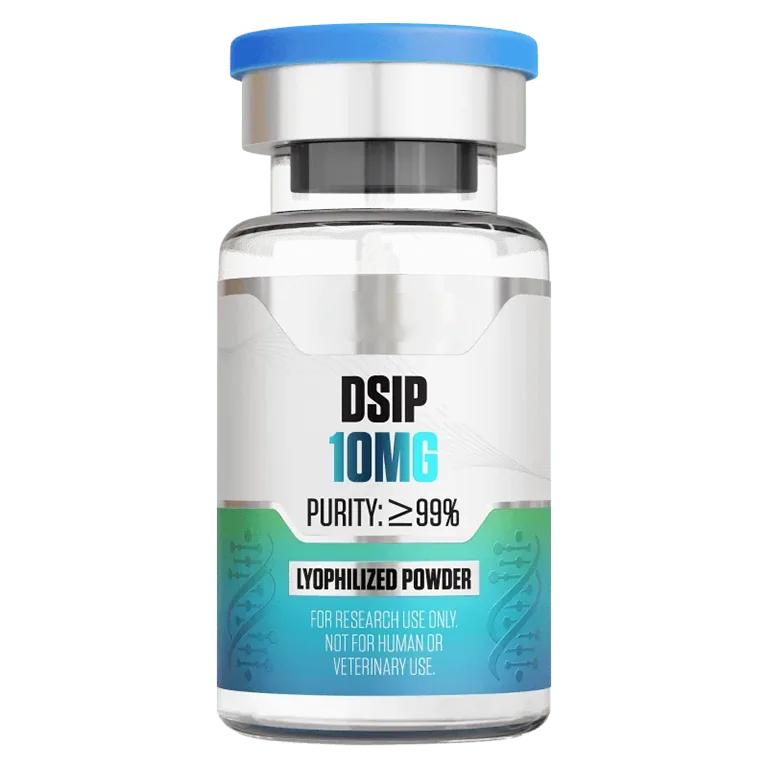
DSIP (10 mg Vial)
Reconstitution and handling reference for DSIP (10 mg Vial). It sets out how much bacteriostatic water to add, what concentration that produces, how the dose maps onto U-100 syringe units, and how the vial should be stored before and after reconstitution.
Custom Peptide Support
- Sequence, purity and scale confirmation
- CoA and technical documentation requests
- API, research and cosmetic peptide options
- Distributor and institution quotation support
Reconstitution and handling reference for DSIP (10 mg Vial). It sets out how much bacteriostatic water to add, what concentration that produces, how the dose maps onto U-100 syringe units, and how the vial should be stored before and after reconstitution.
Quickstart
Reconstitute: Add 3.0 mL bacteriostatic water → ~ 3.33 mg/mL concentration.
Typical daily range: 100–300 mcg once daily in the evening (gradual titration).
Easy measuring: At 3.33 mg/mL, 1 unit = 0.01 mL ≈ 33.3 mcg on a U-100 insulin syringe.
Storage: Lyophilized: freeze at −20 °C (−4 °F); after reconstitution, refrigerate at 2–8 °C (35.6–46.4 °F); avoid freeze–thaw cycles.
Notes
Practical considerations for consistency and safety. Use new sterile insulin syringes; dispose in a sharps container. Rotate injection sites (abdomen, thighs, upper arms) to reduce local irritation [6]. Inject slowly; wait a few seconds before withdrawing the needle. Document daily dose and site rotation to maintain consistency. Avoid other sedatives during DSIP use to clearly evaluate its effects on sleep.
Single peptide protocol reference: Available for related research, development or formulation inquiry workflows.
Reconstitution and handling reference: Available for related research, development or formulation inquiry workflows.
Research-use documentation inquiry: Available for related research, development or formulation inquiry workflows.
Peptide Vials (DSIP, 10 mg each): 8 weeks ≈ 1 vial (10 mg supports ~33–100 doses at 100–300 mcg)
12 weeks ≈ 2 vials
Insulin Syringes (30- or 50-unit recommended for small volumes): Per week: 7 syringes (1/day)
8 weeks: 56 syringes
12 weeks: 84 syringes
Bacteriostatic Water (10 mL bottles): Use 3.0 mL per vial for reconstitution. 8 weeks (1 vial): 3 mL → 1 × 10 mL bottle
12 weeks (2 vials): 6 mL → 1 × 10 mL bottle
Alcohol Swabs: One for the vial stopper + one for the injection site each day. Per week: 14 swabs (2/day)
8 weeks: 112 swabs → recommend 2 × 100-count boxes
12 weeks: 168 swabs → recommend 2 × 100-count boxes
Product Gallery
Quick Inquiry
Customer Support & Price Inquiry
Send product, purity, quantity, destination and documentation requirements. Quantai will follow up through WhatsApp or email.
Email: kongq687@gmail.com
Address: Huangpu District, Guangzhou, China